Chrome extension for insights - anytime and anywhere.

Web application for bulk or advanced analysis.

Pre-built CRM/Other integrations for automation.

Open API for supporting integration
with any 3rd party product.



-
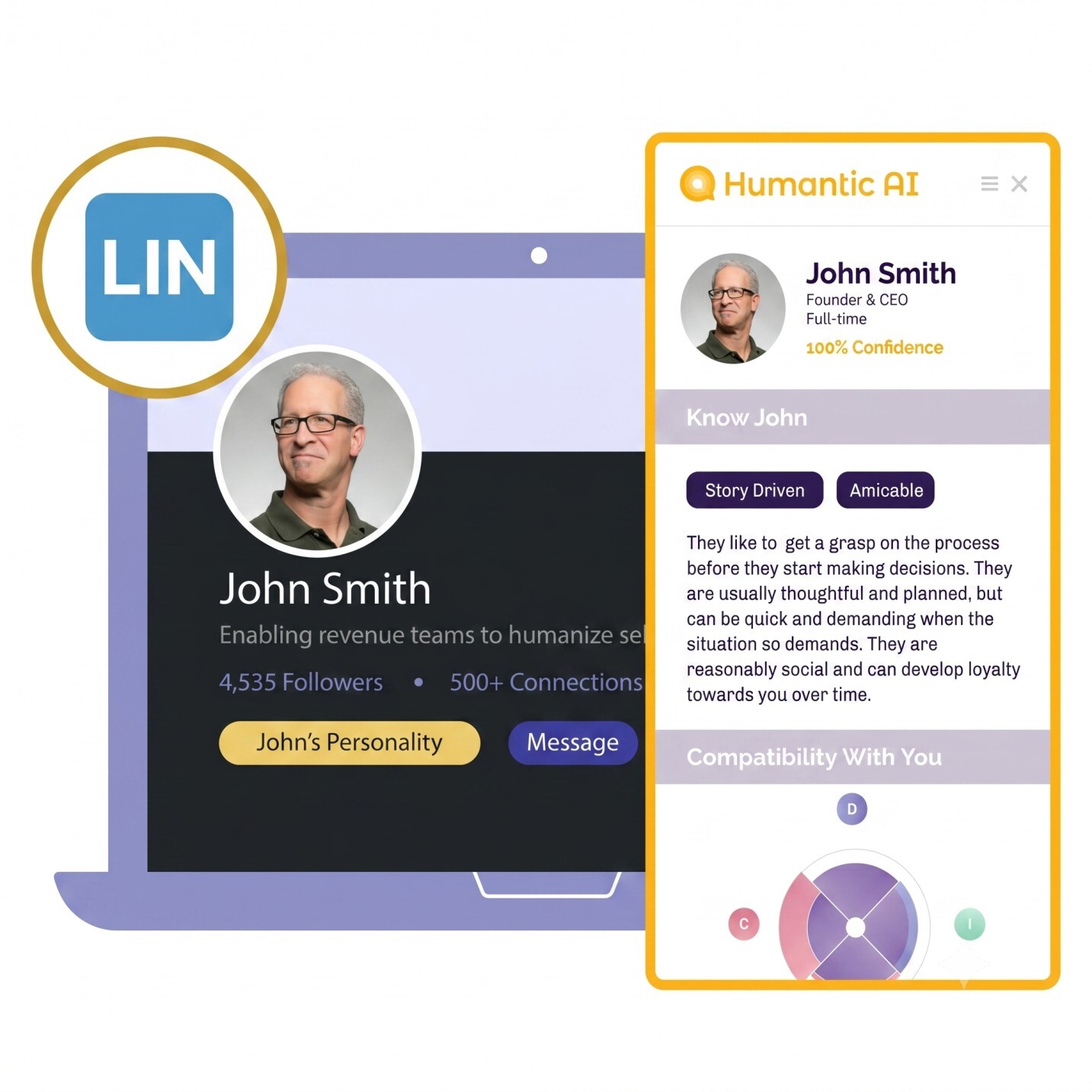
Agent Pi provides state-of-the-art insights about customers and prospects to salespeople. It gathers information from the whole internet to build a public profile for each individual, including their news and media appearances, podcasts, interviews etc. It also predicts their DISC personality (using a proprietary neural network), communication preferences, influence level, and one-click personalization suggestions for emails, social messages, and call scripts.
+
We offer both DISC and OCEAN (Big 5): across 36 derived behavioral dimensions (e.g., influence, detail orientation, risk appetite). Where relevant, we show which sub-dimensions influenced a recommendation.
+
Agent Pi focuses on building a full profile of every buyer, which includes not just their personality, but also their media appearances, hobbies, interests, skills and more. While Crystal indexes majorly on personality alone, Agent Pi is built with the belief that sellers need to deeply understand their prospects holistically and not only their personality. Therefore, messaging and playbooks are produced leveraging both behavioral and other signals. Even when it comes to personality, Humantic AI has 36 personality types compared to 16 personality types in Crystal. It's also worth mentioning that Agent Pi's personality prediction algorithm is often said to be more precise, as noted by many users, including Andy Whaley , Chief Growth Officer at JMARK , Michael Norton , EVP Enterprise at Sandler and many more Buyer-First Sellers.
Through Agent Miia, Humantic AI also layers account intelligence on top of its buyer personality prediction to give sellers a complete picture. For sales teams serious about results, Humantic AI is the preferred choice.
+
A Buying Committee Map identifies champions, influencers, decision-makers, and blockers within a deal and categorizes them into roles like Crusaders, Friendlies, Skeptics, and Neutrals. It is highly valuable for any enterprise deal with multiple stakeholders as salespeople's interactions are often limited to 3-5 top contacts while there are multiple stakeholders impacting the deal behind the scenes.
+
Each profile includes a confidence score and source list. If an insight is flagged wrong, you can submit feedback from the UI; corrections feed back into our validation pipeline and customer-specific models where applicable.
+
Yes. Agent Pi analyzes signals from across the open web — news, podcasts, interviews, public profiles, and more. Even if a buyer has a limited online presence, accurate insights are often still available.
+
DISC Selling is a sales approach where salespeople use the DISC personality profile to understand and serve their buyers better. Trusted by enterprise sellers and taught by leading sales training firms like Sandler, it involves identifying what drives a buyer, and guides sellers to appeal to that. Personality AI tools like Humantic AI help sellers predict a prospect's DISC profile even before meeting them. The partnership between Sandler and Humantic AI reinforces the significance of DISC Selling in the age of AI. Learn More.






Would you like to book a demo in the meantime?