Account signals are the real-time developments happening at your target accounts: leadership changes, strategic deals, financial moves, product launches, and more. Yet Salesforce research shows that sales reps spend just 28% of their week actually selling. The other 72% goes to administrative tasks, CRM updates, and internal work. As a result, most reps cannot monitor dozens of active accounts the way they should.
A new CRO joined one account last week. Meanwhile, three others just announced restructuring. Two are actively researching a solution category that maps exactly to what your team sells. Across the market, a competitor just closed a major funding round and is expanding into the same segment your team owns.
Most reps have no idea. Not because they were not paying attention, but because monitoring account signals across a full book of business is something no human can do manually. The accounts that get attention are the ones making noise. The rest go quiet, and the rep shows up to the next touch working from context that is weeks or months old.
Here is what account signals are, how they fit into the broader category of buyer signals and sales signals, the types that matter most, how Humantic AI surfaces them automatically, and how every GTM role uses them differently.
|
TL;DR What are account signals? Real-time account-level updates that tell your team what changed at a target account: leadership changes, company announcements, hiring trends, strategic moves, legal and financial developments, and buyer intent data showing what topics the account is actively researching right now. Where do Humantic AI Signals show up? Three surfaces today: a Centralized Signals Dashboard inside the platform, a recurring email digest sent Monday, Wednesday, and Friday, and a dedicated Signals section inside every Agent Miia report. Slack and Microsoft Teams notifications are also coming soon. Who uses Signals? Every GTM role, differently. BDRs use it to time outreach. AEs use it to spot deal-level changes. Sales leaders use it to prioritize team attention. RevOps uses it for pipeline and territory health. Marketing uses it to identify campaign moments. CS uses it to catch expansion and churn signals early. What kinds of signals are surfaced? Leadership changes, strategic partnerships and deals, financial and market movements, legal and regulatory actions, product launches and tech integrations, procurement and expansion signals, and industry recognition and competitive shifts. Buyer intent signals are coming soon. What about people-level signals? Account-level signals are live now. People-level signals are on the roadmap and will cover job changes, promotions, LinkedIn activity, and Twitter posts at the individual buyer level. Visitor intelligence signals, which surface inbound intent from identified website visitors, are also coming soon as part of Agent Pi(People Intelligence). |
What Are Account Signals?
An account signal is any event or change at a target company that tells a rep something meaningful has shifted. In fact, the range is wider than most teams expect.
A new executive joins with decades at a competitor and takes over worldwide field operations. A company places an order at a scale that signals major expansion. A stock drops 12% after an analyst downgrade. A federal regulator issues a labor ruling that changes internal compliance priorities. A platform product gets rebuilt entirely around AI. A billion-dollar licensing deal closes and reshapes R&D direction overnight. A creative agency change signals a messaging pivot before any campaign confirms it.
Each of these is an account signal. Each one has a direct implication for when and how to engage.
Common types of account signals
Here are a few of the signals Humantic AI surfaces across your active accounts:
| Signal type | What Humantic AI surfaces |
|---|---|
| Intent signals (Coming soon) | Tracks the topics your target accounts are actively researching online, so reps know when an account is in buying mode before they reach out. Acme Corp spent two weeks researching sales intelligence tools. That is the window. |
| Leadership signals | Publicly announced executive hires, departures, and role changes across your accounts. Acme Corp just brought in a new CRO from a direct competitor. New leaders reset vendor preferences fast, and Humantic AI flags it the day it happens. |
| Strategic and deal signals | Partnerships, licensing agreements, acquisitions, and co-marketing deals that signal where an account is placing its bets. Take Acme Corp, which just signed a major R&D partnership with a hyperscaler. That reshapes their buying priorities overnight. |
| Financial and market signals | Earnings results, stock movements, analyst ratings, and funding events. When Acme Corp dropped 14% after an analyst downgrade, that was budget pressure worth knowing before the next call. |
| Legal and regulatory signals | Lawsuits, settlements, regulatory orders, and labor rulings that shift an account’s internal priorities. Consider Acme Corp settling a nine-figure class action. Compliance becomes a top agenda item overnight, and the entire conversation changes. |
| Product and technology signals | Product launches, platform rebuilds, AI integrations, and tech stack changes. Acme Corp just shipped a full AI rebuild of their core product. They are betting everything on the new stack, and that tells you exactly where the budget is going. |
| Procurement and expansion signals | Large orders, infrastructure investments, and supply chain moves that indicate an account is in major growth mode. Acme Corp placed a nine-figure equipment order last quarter. Expansion like that does not happen without new vendor decisions being made. |
| Industry and competitive signals | Analyst rankings, media coverage, agency changes, and competitive positioning shifts. Acme Corp just topped a major industry ranking and switched creative agencies. A messaging pivot is already in motion before anyone announces it. |
| Hiring and tech stack signals (Coming soon) | Job postings and technology stack changes at target accounts, coming soon as part of Agent Miia. A company hiring five AI engineers while replacing their CRM is in active transformation. Both signals point to where budget is moving and which vendors they are evaluating. |
| People-level signals (Coming soon) | Job changes, promotions, LinkedIn posts, and Twitter activity at the individual buyer level. When a champion gets promoted or publicly posts about a problem you solve, that is the moment to reach out. People-level signals will be part of Agent Pi. |
| Visitor intelligence signals (Coming soon) | Inbound intent from identified website visitors, surfaced as a Pi signal. When a named buyer from a target account visits your pricing page, that visit becomes a live person-level signal in Agent Pi. |
How Humantic AI Surfaces Account Signals
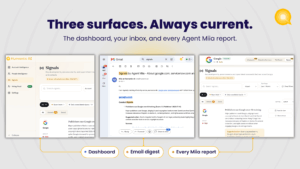
Humantic AI monitors all of these signal types automatically and delivers them in three places. As a result, your team is always working from current intelligence, not background research from the start of the quarter.
 Surface 1: Your Account Signals Dashboard
The Centralized Signals Dashboard is the primary home for account signals inside the Humantic AI platform. It lives in the left navigation under Account Intelligence, and gives every rep a single view across their full account list: what changed, at which accounts, what the impact level is, and what the platform recommends doing next.
Instead of opening each account and hoping something recent surfaced, reps see movement across their entire book at a glance. Each signal card shows the account name, the development, an impact rating (High, Medium, or Low), a suggested next action, and a source link. In short, everything the rep needs to decide whether and how to act is in one place.
Admins can customize which signals the dashboard surfaces using the Intent Topic Tracker. Teams define which topics Miia tracks based on how they actually sell. The feed becomes specific to the motion, not a firehose of general company news. A team selling to finance leaders tracks financial signals. A team selling infrastructure software tracks engineering hiring and tech stack changes. The feed becomes specific to the motion.
Surface 2: Account Signals in Your Inbox
Not every rep starts their day in the platform. Instead, the Signals email digest meets them where they already are.
Every Monday, Wednesday, and Friday, reps receive a curated update on their active accounts. Leadership changes. Strategic deal announcements. Legal and financial developments. The email is designed to be read in minutes, not processed as a data report.
This matters most for accounts that are not in an active deal stage. Pipeline accounts get attention by default. In contrast, accounts in early nurture or long sales cycles tend to go quiet. As a result, the digest keeps those accounts visible without requiring the rep to remember to check in.
Slack and Microsoft Teams notifications are coming soon for reps who prefer signals delivered directly into their existing workflow rather than a separate inbox.
“Humantic AI is my core tool for ABM to understand and read my buyer, and craft hyper-personalized campaigns at the contact level. We can see signals, buying signals from our target accounts via Miia reports in Humantic’s AI centralized dashboard. And I’m notified via email when something changes, so that’s very, very useful.” — Katya Tarapovskaia, Head of AI & Marketing Solutions, Co-Founder
Surface 3: Account Signals Inside Every Miia Report
The third surface is inside Agent Miia itself.
Every Miia report includes a dedicated Signals section built directly into the account intelligence output. When a rep generates a report on an account, they get the strategic priorities, the org chart, and the fit rating. Alongside all of that, they get the most recent signals: what changed since the last report and what the account has been communicating.
This is particularly useful for accounts a rep is returning to after a gap. Specifically, the Signals section covers what happened in the interim. The rep therefore walks into the next conversation with current context, not just historical background.
Who Uses Account Signals and How
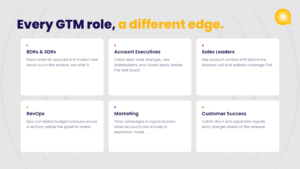
Signals is useful across every GTM function. However, the way each role uses it is different.
Sales Leaders and CROs
When a target account recruits a new EVP from a direct competitor, that is not a routine hire. A leader brought in at that level reshapes vendor preferences and resets evaluation criteria. Moreover, they open a window before existing relationships harden. The sales leader who sees that signal first gets into the conversation. Signals surfaces that development the day it happens, across the entire account list.
Account Executives
An AE’s deal goes quiet three weeks after a strong call. Before sending a check-in, they pull a fresh Miia report. The Signals section shows two things that changed: a billion-dollar licensing deal closed and two new stakeholders joined the approval chain. As a result, the right response is not a follow-up email. It is a rebuilt deal map with targeted outreach to each new contact. The AE who misses that signal sends a generic check-in. The one who catches it shows up with a reason.
Sales Development (BDRs and SDRs)
A BDR working a technology account sees two signals arrive in the same week: a major AI integration announcement and a new EVP joined from a direct competitor. Both signals point to the same window. In other words, the account is in motion and a new sales leader is forming vendor opinions. That is the moment to reach out. The signal tells the BDR when to go in, and the new leader’s background tells them exactly what to say.
Revenue Operations
When three accounts in the same segment show a stock decline in the same two-week window, that is correlated budget pressure across the territory. As a result, RevOps can flag it before the next forecast call. Coverage shifts. Reps are briefed before they walk into a freeze they did not see coming. Signals gives RevOps the picture before the pipeline review turns into damage control.
Marketing
A cluster of enterprise accounts in the same vertical each sign major R&D partnerships in the same quarter. All of them are expanding external collaboration. In addition, all of them have new stakeholders who did not exist in the last campaign cycle. Marketing uses that signal cluster to time a targeted sequence. Not on a fixed calendar, but when the accounts are actively in expansion mode and evaluating new tools.
Customer Success
A CS manager sees two signals arrive for a strategic account in the same week: a nine-figure legal settlement and a stock drop following an analyst downgrade. The renewal is six weeks out. Without those signals, the CS team walks into the renewal conversation cold. With them, however, they get ahead of it, adjust the business case, and schedule the conversation before the account goes into freeze.
What Humantic AI Is
Humantic AI is a Buyer Intelligence platform built around four pillars: Account Intelligence (Agent Miia), People Intelligence (Agent Pi), Visitor Intelligence (Vidar), and Intent Intelligence. Signals is built on top of Account Intelligence. Together, the four pillars feed into Kairos, the Humantic AI Activation Engine, which delivers intelligence into the seller’s workflow across every stage of the deal. Teams using the platform have seen a 109% increase in pipeline, a 16.2% lift in closed revenue, and a 36.5% improvement in deal velocity (source).
FAQs
What are account signals in sales?
Account signals are real-time events and changes at a target company that indicate something meaningful has shifted. Leadership changes, strategic deals, stock movements, legal and regulatory actions, product launches, procurement expansions, industry recognition shifts, and buyer intent data are all examples. The value is not just the information. It is knowing when to act on it.
What types of signals should sales teams track?
The most actionable signal types are leadership signals (publicly announced executive changes, departures, role changes), strategic and deal signals (partnerships, licensing, acquisitions), financial and market signals (stock movements, earnings, analyst ratings), legal and regulatory signals (settlements, regulatory orders, policy proposals), product and technology signals (launches, integrations, platform changes), procurement and expansion signals (large orders, supply chain moves), and industry and competitive signals (rankings, agency changes, positioning shifts). Buyer intent signals, which surface which topics accounts are actively researching, are coming soon. Each type indicates something different about where an account is and what its priorities are right now.
Where do Humantic AI Signals show up?
Humantic AI surfaces account signals in three places: the Centralized Signals Dashboard inside the platform, a recurring email digest sent every Monday, Wednesday, and Friday, and a dedicated Signals section inside every Agent Miia report. Each surface serves a different moment in a rep’s workflow.
How often does the Humantic AI Signals email digest arrive?
The Signals email digest is sent automatically every Monday, Wednesday, and Friday. Each email surfaces curated account updates for the rep’s active accounts, including recent news, leadership changes, and the latest account developments.
How are Signals different from regular CRM alerts?
CRM alerts fire when someone logs activity inside the CRM. Signals fire when something changes at the account itself, independent of what any rep has done. One tracks internal activity. The other tracks the market.
What is the difference between account signals, buyer signals and sales signals?
Sales signals and buyer signals are broad terms for any data point that tells a rep a potential buyer is moving toward a decision. Account signals are a specific and highly actionable type: real-time events and changes at a named company in your pipeline. Leadership changes, funding rounds, product launches, and regulatory actions are all account signals. They are more precise than general buyer signals because they tie directly to a specific account your team is already working.
How does a BDR use account signals to prioritize outreach?
BDRs use Signals to identify accounts that are currently in motion. When a new executive joins who matches the target profile, or when a strategic deal or market event changes the account context, that is a timing signal. It tells the BDR when to reach out and gives them a specific, relevant reason to open with.
How do sales leaders use account signals to manage their teams?
Sales leaders use Signals in pipeline reviews to identify deals where the account context has shifted since the last forecast call. A leadership change, a funding event, a legal development, or a strategic deal at a target account can completely change the urgency and the angle of a deal. Leaders who see these signals before their reps catch them can reprioritize coverage and spot risk before it becomes a closed-lost.
Can admins customize which signal topics are tracked?
Yes. Admins can define and manage intent topics using the Intent Topic Tracker, which determines which signals Miia tracks for reports and the dashboard. This lets teams align the signal feed to their specific business priorities.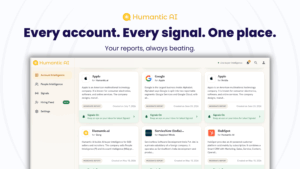 Account intelligence does not expire after the first report. Accounts keep moving. Executives join and leave. Deals close and reshape priorities. Regulators act. Stocks move. In the end, the reps, the RevOps teams, and the CS managers who act on that movement in real time are the ones who show up with the right conversation at the right moment.
“I have been extremely impressed by this new functionality [Signals] and the insights gleaned are quickly shared with the pertinent parties in our organization, especially with our strategic accounts.” — Nicholas Trerotola, Area Vice President – West and Chief Sustainability Officer, RepScrubs
If you want to see how Signals works across your team’s accounts, book a demo and we’ll show you the platform live.
Written by Humantic AI’s marketing team.